
Friday, February 01
10:24.59
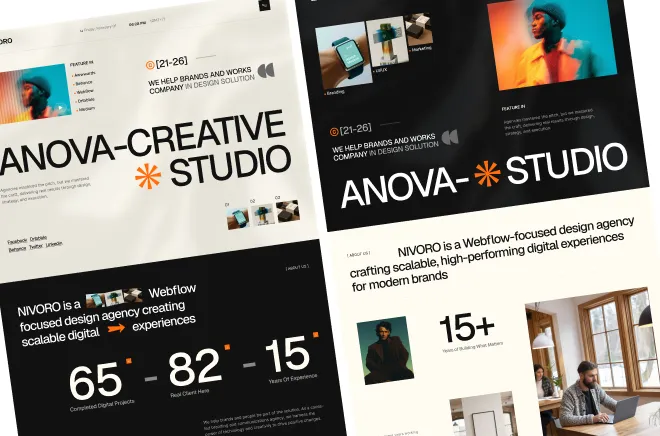
Ready to launch, MCP 2.0 ready agency template.
Available for new project


When you browse the Webflow Marketplace, you will notice that some templates carry an "Exceptional Quality" badge. This is not a marketing label — it is a rating assigned by Webflow's internal review team after a structured quality evaluation. Most templates never reach it. Understanding what this rating means helps you make smarter decisions when buying a template — and helps designers understand what separates a good template from a great one.
Every template submitted to the Webflow Marketplace goes through a manual review. Reviewers evaluate the template against a defined rubric covering design, accessibility, responsiveness, SEO structure, CMS architecture, and interaction quality. Templates can receive "Good," "Great," or "Exceptional" ratings. The gap between Good and Exceptional is significant.


Design quality is the first dimension — Is the visual system consistent? Are spacing, typography, and color used with intention? Does every section serve a purpose? A template needs intentional design decisions, not accidental ones.
Accessibility comes next — Are heading hierarchies correct? Do all images have alt text? Are interactive elements keyboard-navigable? Does text meet contrast standards? Accessibility is not optional; it directly impacts user experience and SEO.
Responsiveness must be flawless — Does the template look polished across all breakpoints — desktop, tablet, and mobile — without broken layouts or overflow issues? Every breakpoint matters.
SEO structure is critical — Does every CMS item have a unique meta title and description? Is the URL structure clean? Are Open Graph fields populated? Good SEO structure starts with the template.
CMS architecture determines scalability — Are collection fields named clearly? Is the structure flexible enough for real content without breaking the design? A confusing CMS becomes a liability as content grows.
Interactions must enhance, not distract — Are animations purposeful and performant? Do they enhance the experience without slowing down the site? Performance is part of quality.
The most common reasons templates receive "Good" rather than "Exceptional" include missing alt text on images, duplicate or missing SEO meta descriptions, incorrect heading hierarchy, and over-engineered or broken interactions. These are details that are easy to miss in the design phase but critical to the user experience.
An Exceptional Quality rating is not a design award. It is a technical and experiential certification. When you choose an Exceptional-rated template, you are choosing a foundation that has been reviewed line by line — one that saves you from discovering problems after launch. It means the builder has thought through every detail and built to professional standards.
Some Important Takeaway Key points:


